

Northumbria University researchers are transforming Pakistani banana farming waste into biodegradable textiles and renewable energy through a circular economy model that addresses both textile industry plastic pollution and rural energy access, work that has gained recognition at the Green Gown Awards.
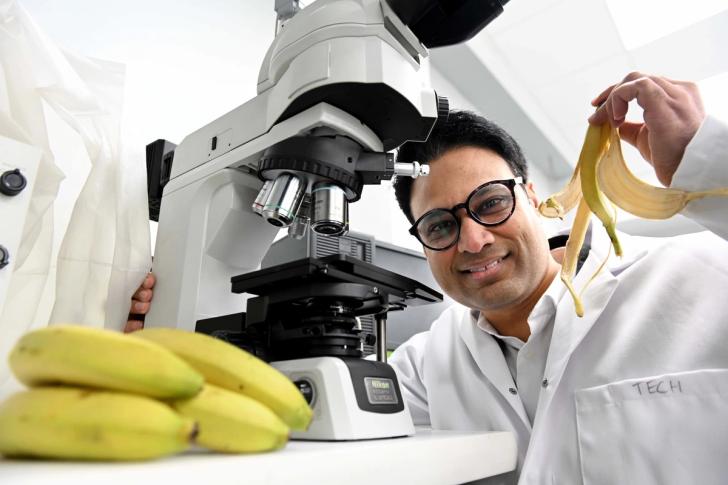
Research teams at Northumbria University have developed a technique to convert banana farming waste in rural Pakistan into biodegradable textiles and renewable energy.
The process extracts fibres from banana plant waste for textile production, with the remaining plant material undergoing gasification to produce syngas - a renewable gas that provides locally sourced energy as an alternative to fossil fuels. The work, led by Dr Jibran Khaliq from Northumbria's School of Engineering, Physics and Mathematics, also generates biofertiliser as a byproduct.
Dr Khaliq said the approach "not only benefits Pakistan's textile industry but also brings clean, affordable energy to rural communities while improving soil fertility through biofertiliser production."
The work recently received high commendation in the Research with Impact category at the Green Gown Awards, which recognise sustainability excellence across UK and Ireland tertiary education.
The research responds to growing concerns about textile industry resource consumption. The global textile sector consumes 3.25 billion tonnes of materials annually whilst achieving just 0.3 per cent circularity, with 63 per cent of raw materials comprising oil-based synthetic fibres, according to recent analysis from Circle Economy and the H\&M Foundation.
Converting agricultural surplus
The Northumbria project targets banana farming waste, which typically accumulates after harvest. Fibres extracted from banana plants are spun into biodegradable textiles that offer an alternative to conventional materials used in fast fashion. The remaining plant waste then undergoes thermochemical gasification to produce syngas.
Syngas production from agricultural waste represents an established conversion technology. The gasification process converts biomass into a gas mixture primarily comprising hydrogen and carbon monoxide through partial oxidation at elevated temperatures, according to published research on biomass gasification systems.
Green Gown Awards judges described the initiative as "a strong project with positive impact on communities, and tangible environmental, social and economic benefits."
The project is a result of international collaboration, with Northumbria University working alongside the National Textile University, Prime Eurotech in Pakistan, and UK-based Eco Research Ltd.
//standfirst//
Northumbria University researchers are transforming Pakistani banana farming waste into biodegradable textiles and renewable energy through a circular economy model that addresses both textile industry plastic pollution and rural energy access, work that has gained recognition at the Green Gown Awards.


Get our weekly digest
resource.co article ai

How will the government and DMOs address the challenges of including glass in DRS while ensuring a level playing field across the UK?
There's no easy solution to include glass in the DRS while maintaining a level playing field. Potential approaches include a phased introduction of glass, potentially with higher deposits to reflect its logistical challenges. The government and DMOs could incentivise innovation in glass packaging design and subsidise dedicated return points for glass-handling. Exemptions for smaller businesses unable to handle glass might also be necessary. Any successful solution will likely blend several approaches. It must address the differing priorities of devolved administrations, balance environmental benefits with logistical and cost implications, and be supported by robust consumer education campaigns emphasizing the importance of glass recycling.