

Specialist arts university consolidates 16 years of materials-led research into unified hub, drawing on South West resources and regional partnerships to embed circular approaches at the design stage rather than at end of life.
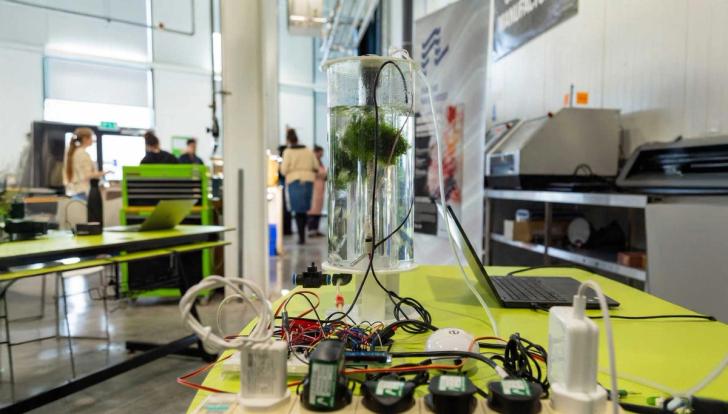
Arts University Plymouth has established the Centre for Circular Materials, aims to be a research hub that brings together the university's work on how materials are chosen, used and kept in circulation across creative practice, design fabrication and external partnerships.
The centre, announced today (2 February), consolidates activities the university has been running through two existing platforms. Making Futures, a biennial research conference, has convened international debate around materially led practice and sustainability since 2009. As well as Fab Lab South West, founded in 2014, which provides tools and partnership routes to translate research into prototypes and applied projects.
The university says the centre will focus on what it describes as ‘bioregional and responsible materiality’ – how materials shape the life and culture of places, drawing on what can be sourced, grown and remade in the South West, and on the skills, industries and supply chains that determine how materials move through the region.
"The Centre for Circular Materials is about taking responsibility for the materials and systems we use in the 21st century," said Professor Paul Fieldsend-Danks, Vice-Chancellor and Chief Executive at Arts University Plymouth. "It brings into focus the work we've been developing for a long time, and makes a clear commitment: to design out waste at the point of creation, not simply manage it at the end."
Several current projects highlight the centre's focus areas. Through a project called Of the Ground, researchers and students in textile design have created a plant-based dye garden at Plymouth's Poole Farm, developed in collaboration with National Trust Saltram. The university reports that the project, supported through Knowledge Exchange funding, advances non-toxic, regenerative approaches to colour using locally grown plants.
Working with Dorset-based Agrikinetics, Fab Lab South West tested whether pulp from miscanthus grass – commonly known as elephant grass – could provide a chemical-free alternative to imported paper and card in packaging. According to the Fab Lab South West project page, the collaboration has resulted in proof-of-concept fruit cartons and prototype moulds, and Agrikinetics subsequently secured an Impact Lab SME grant to invest in pulping equipment for pilot-scale production.
A further collaboration with Barnaby's Brewhouse saw involved Lab South West prototyping a system to capture and reuse CO₂ released during beer fermentation, aiming to reduce reliance on externally sourced gas in regional food-and-drink production.
The university's Material Futures Research Group has also been identifying South West-based material histories and gathering physical profiles of the peninsular coastal region, exploring how locally resourced clay, soil and coastal minerals could form a regional material library for creative practice and research.
Place-based approach
The centre's emphasis on regional material supply chains and locally sourced alternatives connects to Plymouth's wider positioning on circular production. In 2019, the city became the first in the UK to join the Fab City network, a global initiative in which participating cities have pledged to work towards producing everything they consume by 2054. Arts University Plymouth was among the founding partners of that commitment alongside Plymouth City Council, the University of Plymouth and the Real Ideas Organisation.
Associate Professor Stephanie Owens, Dean of Arts, Design and Media at Arts University Plymouth, said the centre would form a point of material expertise for researchers and practitioners both within and outside the South West. "It starts with materials as a creative decision and a responsibility, and asks what circularity looks like when it's rooted in the South West, in what we can source, grow, reuse and remake here," she said.


Get our weekly digest
resource.co article ai

How will the government and DMOs address the challenges of including glass in DRS while ensuring a level playing field across the UK?
There's no easy solution to include glass in the DRS while maintaining a level playing field. Potential approaches include a phased introduction of glass, potentially with higher deposits to reflect its logistical challenges. The government and DMOs could incentivise innovation in glass packaging design and subsidise dedicated return points for glass-handling. Exemptions for smaller businesses unable to handle glass might also be necessary. Any successful solution will likely blend several approaches. It must address the differing priorities of devolved administrations, balance environmental benefits with logistical and cost implications, and be supported by robust consumer education campaigns emphasizing the importance of glass recycling.