

Impact Solutions has announced that it has successfully realised proof-of-concept of a process that will see finite metals being selectively recovered from used lithium-ion batteries.
‘Low-impact’ solvents will be used to carry out the CellMine procedure, which the company claims will dissolve metals using a low energy input ‘due to the low process temperatures required’. This contrasts with the energy-intensity of existing hydrometallurgical and pyrometallurgical battery recycling practices.
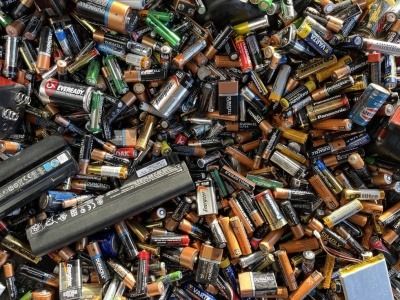
The recovery of cathode materials has already begun, with Impact Solutions obtaining metals at a purity of over 99.5 per cent from samples of black mass procured from a mixed-feedstock of lithium-ion battery waste.
Innovate UK has allocated £500,000 in funding to scale up the project, after an initial £100,000 investment from the Ecosurety Exploration Fund saw the company translate the process from theory to proof-of-concept across the space of 10 months. The next stage, which will take place over the next 18 months, will see research expanded to achieving the recovery of ‘all target materials from black mass’, including cobalt, nickel, and lithium. Investigations will also take place to explore the potential for reusing solvents, particularly within the context of commercial application were the process to be successfully scaled up to a pilot plant. Impact Solutions’ research partners include St Andrews University, which will ‘test and validate the recyclate resulting from the CellMine process’ as a world leader in cathode research, and Ecosurety, which will ‘assist in developing supply chain and feedstock relationships’.
The plastic recycling enterprise has chosen to focus its efforts on the recovery of lithium-ion batteries due to finiteness of the material. It points to research from the Green Alliance which states that the global rate of recycling lithium and other rare earth metals is currently situated at 1 per cent. If this rate were increased to 70 per cent for lithium, 80 per cent for rare earth metals, and 90 per cent for cobalt by 2050, however, the UK could ‘meet virtually all the critical material needs required for electric vehicles, wind turbines and solar energy generation from secondary materials’, the Green Alliance asserts.
Simon Rathbone, Development Manager from Impact Solutions, commented: “The Ecosurety Exploration Fund has allowed us to develop CellMine from very early, theoretical research into a system that has proven lithium batteries can be recycled in a safe, low cost, environmentally friendly and sustainable manner. Simply put, without this critical funding we would have been unable to progress the technology to the point it is today.”
“The new funding from the UK Government will allow us to further refine and scale the technology to showcase the system, leading to CellMine’s first pilot plant in the near future. We are excited about what the future holds for CellMine and we are proud that we can continue its journey with both Ecosurety and St Andrews University as project partners.”
Gareth Morton, Discovery Manager at Ecosurety, stated: “From project kick-off at the beginning of 2021, CellMine very quickly proved to be an incredibly innovative project. It is successfully pioneering new scientific understanding that will improve the recovery of extremely valuable and scarce metals in batteries, whilst also reducing the environmental impact of doing so at the same time.”
“We're proud to have supported the proof-of-concept development and are thrilled to continue our involvement in the next stage that will see the project progress from the laboratory to a fully-fledged process.”
Professor John Irvine, Head of research at JTSI Group – Energy and Materials at St Andrews University, said: “We are delighted to be working with Impact Solutions and Ecosurety on this very exciting project developing a more effective way to recover materials from spent batteries. Lithium-ion batteries are of critical importance to our energy future, but it is essential that we find new routes to recycle these batteries in a sustainable manner.”


Get our weekly digest
resource.co article ai

How will the government and DMOs address the challenges of including glass in DRS while ensuring a level playing field across the UK?
There's no easy solution to include glass in the DRS while maintaining a level playing field. Potential approaches include a phased introduction of glass, potentially with higher deposits to reflect its logistical challenges. The government and DMOs could incentivise innovation in glass packaging design and subsidise dedicated return points for glass-handling. Exemptions for smaller businesses unable to handle glass might also be necessary. Any successful solution will likely blend several approaches. It must address the differing priorities of devolved administrations, balance environmental benefits with logistical and cost implications, and be supported by robust consumer education campaigns emphasizing the importance of glass recycling.