

The Western Riverside Waste Authority (WRWA) has today (14 June) announced the launch of a new booking system and Automatic Number Plate Recognition (ANPR) technology at one of its London recycling centres.
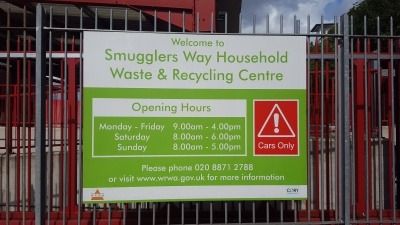
The Smugglers Way Household Waste and Recycling Centre, situated in Wandsworth, serves residents of Hammersmith and Fulham, Kensington and Chelsea, Lambeth, Wandsworth and Westminster.
With the recycling centre seeing over 1,000 residents a day, WRWA has joined forces with public-sector booking specialist bookinglab and technology provider SNAP ANPR to deliver a new booking system that works with on-site ANPR cameras to automate visitor access.
WRWA hopes this will allow full control of site capacity, minimising queuing, ensuring visitor safety and limit site usage to the five boroughs. This is estimated to save taxpayers up to £100,000 a year.
Sharon Ross, Deputy General Manager at WRWA, commented: “The bookinglab system provides a service that enables residents to make bookings on the same day.
“In the short time the trial has been operating, we have received positive feedback from residents that like the convenience of not having to queue. They see the environmental benefit that this brings.”
Residents can make a booking on the same day as their visit, increasing site efficiency as this minimises the time visitors spend on-site.


Get our weekly digest
resource.co article ai

How will the government and DMOs address the challenges of including glass in DRS while ensuring a level playing field across the UK?
There's no easy solution to include glass in the DRS while maintaining a level playing field. Potential approaches include a phased introduction of glass, potentially with higher deposits to reflect its logistical challenges. The government and DMOs could incentivise innovation in glass packaging design and subsidise dedicated return points for glass-handling. Exemptions for smaller businesses unable to handle glass might also be necessary. Any successful solution will likely blend several approaches. It must address the differing priorities of devolved administrations, balance environmental benefits with logistical and cost implications, and be supported by robust consumer education campaigns emphasizing the importance of glass recycling.