

Total tonnage fell again in 2024 but incineration is up almost 17 per cent since 2019, while England remains well short of its 2042 halving target.
England's residual waste continued its slow decline in 2024, falling 9.3 per cent below 2019 levels to 58.4 million tonnes, but on the legally binding per-capita measure the country remains far short of its 2042 halving target, Defra figures published this week show.
Per-capita residual waste slipped from 1,013 kilograms to 996 kilograms over the year. Most of the year-on-year reduction came from landfill, where tonnage has fallen to 37.8 million tonnes, 16.8 per cent below 2019. Incineration, including energy from waste, rose for a fifth straight year to 18.9 million tonnes, 16.9 per cent above 2019.
This shift is most pronounced when it comes to municipal waste, with incineration tonnages growing by almost a quarter since 2019, while landfill has fallen by almost a quarter. This substitution is nothing new as local authority landfill quantities roughly halved between 2010 and 2019, from 352 kilograms per person to 175, while at the same time per-capita incineration almost tripled.
The 58.4 million tonne headline does not have a target attached to it. Under the Environment Act 2021, the legally binding measure is residual waste per capita excluding major mineral wastes, which fell to 535 kilograms per person in 2024, 6.9 per cent below 2019. By 2042, that figure is targeted to drop to 287 kilograms, close to a halving in 18 years. The 2029 interim ceiling is 437 kilograms per person and 25.5 million tonnes. England is around 18 per cent above both.
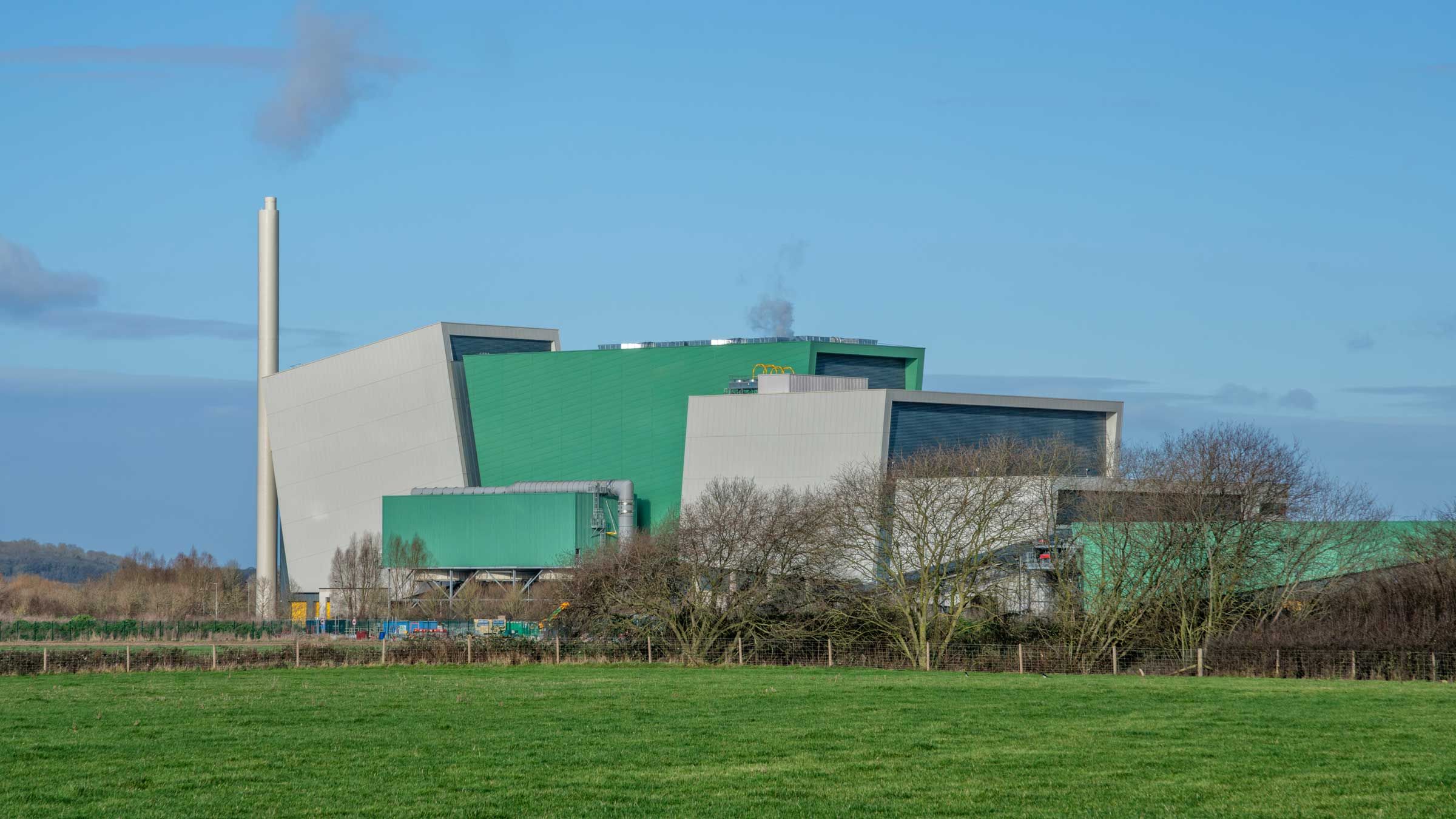
England has continued to add incineration capacity even as residual waste has fallen. Operational energy-from-waste capacity is estimated around 14.3 million tonnes a year across roughly 50 plants, with a further 3.9 million tonnes under construction and 9.5 million tonnes consented but not yet built. This means capacity definitely coming online is already close to the 18.9 million tonnes incinerated in 2024. Defra's own capacity modelling expects operational tonnage to reach 18.8 million tonnes by 2035, against 19.4 million tonnes of residual waste forecast for the same year. Campaign group UKWIN puts the projected residual arisings much lower, projecting 11.7 million tonnes by 2042 if statutory targets are met.
The reduction in residual arisings is meant to come from three policy reforms. Extended producer responsibility for packaging, particularly with the advent of modulated fees on producers; the deposit return scheme for drinks containers is due to launch in 2027; and Simpler Recycling, which mandated weekly food waste collections and uniform dry recycling to English households from April this year. Defra's delivery plan projects that between 82 and 100 per cent of the reduction needed for the 2029 targets will come from those measures. Notably, the 2024 figures were published before any of these had taken effect.
One further dimension is incineration (inc EfW) being placed in the UK Emissions Trading Scheme in 2028. Here, the carbon cost will fall most heavily on fossil-derived waste in the residual stream, principally plastics and fibre. In theory, this should creates a price signal for local authorities and contractors to extract recyclables prior to disposal. The Local Government Association has modelled the cost to English councils at £747 million in 2028 and £1.1 billion by 2036, with a cumulative bill of as much as £6.5 billion over the period. In an LGA survey of councils carried out in early 2025, 93 per cent said they would not be able to absorb the additional costs within existing waste budgets, adding to pressure on pEPR to fund diversion away from EfW.
Per-capita figures within the municipal residual stream show 120 kilograms of food waste, 94 of paper and card, 71 of plastic, 16 of metal and 12 of glass. Each material is reported as having fallen 5.1 per cent since 2019 and 1.3 per cent since 2023. The identical movements are an artefact of methodology. Composition is still derived from a 2017 WRAP (Waste and Resources Action Programme) study published in 2020. Defra has listed updated composition research among its priorities.
Other gaps remain in the data. Refuse-derived fuel sent overseas for energy recovery, the smallest of the three treatment routes, has shrunk by nearly 40 per cent since 2019 to 1.7 million tonnes. Energy recovery outside conventional energy from waste, such as solid recovered fuel sent to cement kilns, is not yet captured at all. Cross-border movement estimates should become more accurate once digital waste tracking is fully operational, and the split between municipal and non-municipal sources is on Defra's improvement list.


Get our weekly digest
resource.co article ai

How will the government and DMOs address the challenges of including glass in DRS while ensuring a level playing field across the UK?
There's no easy solution to include glass in the DRS while maintaining a level playing field. Potential approaches include a phased introduction of glass, potentially with higher deposits to reflect its logistical challenges. The government and DMOs could incentivise innovation in glass packaging design and subsidise dedicated return points for glass-handling. Exemptions for smaller businesses unable to handle glass might also be necessary. Any successful solution will likely blend several approaches. It must address the differing priorities of devolved administrations, balance environmental benefits with logistical and cost implications, and be supported by robust consumer education campaigns emphasizing the importance of glass recycling.