

A new report has revealed that the European plastics system needs ‘significant change’ in order to meet long-term circularity and net-zero emissions goals. ‘Radical innovation, ambitious policies, and significant capital investment’, the report says, will be needed to make a fully circular, net-zero plastics system possible.
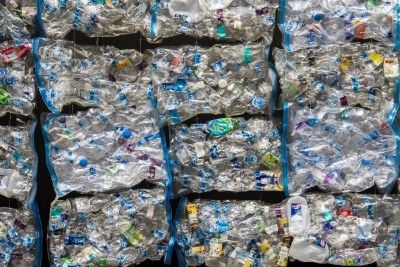
The report, entitled ‘ReShaping Plastics – Pathways to a Circular, Climate Neutral Plastics System in Europe’, calls for a redesigned plastics system, simultaneously addressing circularity and carbon emissions. ReShaping Plastics highlights the value of both upstream and downstream measures, emphasising that recycling alone will not be enough. Outlining what this system might look like, ReShaping Plastics focuses on four important plastic-using sectors: packaging, household goods, automotive, and construction. The report goes on to present six scenarios, outlining which actions should be prioritised for different plastic applications if the industry is to meet circularity and climate mitigation goals.
According to ReShaping Plastics, the current adaptations in the European plastics system are too slow to align with agreed climate goals, circularity policies and the European Green Deal. The report prompts the need for collaborative and systemic approaches across all stakeholders – cooperation between industry, government and civil society is critical for the success factor of the ‘significant change’ needed, it says.
ReShaping Plastics’ key findings are as follows:
- Current industry and policy actions could more than double system circularity from 14 per cent to 30 per cent by 2030, leading to a reduction of 11 million tonnes (Mt) of CO2e emissions and 4.7 Mt less plastic waste disposed of in landfills or incinerators. However, these actions would still leave a highly resource inefficient system and are not fast enough to align with the goals of the Circular Plastics Alliance, European Green Deal, or the Paris and Glasgow climate agreements.
- There is no ‘silver bullet’ solution to significantly reduce waste disposal and GHG emissions. Upstream and downstream solutions are complementary and are most effective when deployed together.
- Adoption of circular economy approaches in the plastics value chain – applying upstream and downstream solutions together – can drive significant reductions in GHG emissions and waste disposal in the next decade and beyond. Yet, it is still not enough to reach net-zero carbon emissions by 2050.
- To achieve net-zero carbon emissions by 2050, multiple less mature, innovative technologies and approaches need to be developed and deployed in addition to proven circular economy levers to further decrease GHG emissions and decouple plastic from fossil fuel feedstocks.
- The next three to five years are a ‘critical window for action’. Long technology maturity cycles and capex lock-in for large infrastructure investments mean that the decisions taken in the early 2020s will determine whether the European plastics system will achieve a circular economy and net zero GHG emissions by 2050.
Additional approaches provided by the report include – shifting to green hydrogen, using carbon capture and storage (CCS) technologies to incinerators and steam crackers, shifting to bio-based polymers and electrifying steam crackers, which decreases GHG emissions and can decouple plastic from fossil fuel feedstocks. ReShaping Plastics highlights these as critical to achieve net-zero carbon emissions in the European plastics system, because ‘circular economy levers alone, while critically important, will not suffice’.
The report also identified data gaps in current plastic waste records, including the possibility that over 40 per cent of the plastic put on the market in Europe is not being fully accounted for in waste statistics. It concludes that such gaps present a major challenge to the understanding of the environmental and climate impacts of plastic.
Commenting on the report, President of the Finnish Innovation Fund Sitra, Jyrki Katainen, said: “This rigorous and extensive report should act as a clarion call for all European stakeholders involved in plastics.
“One of the report’s key findings is that the European plastics system is already adapting to address the challenges of climate change mitigation and circularity but commitments on behalf of industry and policymakers do not go far or fast enough to align with the goals of the European Green Deal or the Paris and Glasgow climate agreements. We must adapt and we must do so at pace. This report provides a roadmap to this critical transition, but it will be challenging so we must start now.”
Program Director and Partner at SYSTEMIQ Yoni Shiran added: “How close the system comes to transformation will depend on the level of leadership shown by key decision makers across all stakeholder groups.
“The adoption of circular economy approaches across the plastics value chain can drive a 33 per cent reduction in GHG emissions and a 46 per cent reduction in waste disposal by 2030. It is both affordable and achievable within technical constraints but requires an ambitious combination of both upstream and downstream solutions.
“A new plastics system is within reach but will require bold action. It needs industry, public sector, investors, and civil society to come out of their “trenches” and collaborate in a deeper way based on a shared fact-base – that was the main objective of this program.”
Virginia Janssens, Managing Director of Plastics Europe, also stated that: “We recognise the severity of the climate crisis and plastics waste challenge. It’s essential therefore that we continue to explore ways to promote fact-based discussion with the whole plastics value chain, and policy makers, on how best to accelerate the transition towards the EU’s net zero carbon emissions and circularity goals. That is why we decided to commission this report.
“Plastics Europe welcomes the report. It is insightful and thought provoking and will make a valuable contribution to informing and guiding the decisions of Plastics Europe, our members, and all stakeholders. Plastics Europe’s members have been investing and innovating to support the EU’s net zero and circularity ambitions for a long time, and this has accelerated in recent years.
“However, we support the report’s central finding that faster systemic change is essential, and that circularity is the most important medium-term lever of the European plastics system’s transition.”


Get our weekly digest
resource.co article ai

How will the government and DMOs address the challenges of including glass in DRS while ensuring a level playing field across the UK?
There's no easy solution to include glass in the DRS while maintaining a level playing field. Potential approaches include a phased introduction of glass, potentially with higher deposits to reflect its logistical challenges. The government and DMOs could incentivise innovation in glass packaging design and subsidise dedicated return points for glass-handling. Exemptions for smaller businesses unable to handle glass might also be necessary. Any successful solution will likely blend several approaches. It must address the differing priorities of devolved administrations, balance environmental benefits with logistical and cost implications, and be supported by robust consumer education campaigns emphasizing the importance of glass recycling.