

The North London Waste Authority (NLWA) has announced that none of its recycled plastic gets shipped abroad to developing countries, on the back of the Greenpeace report ‘Trashed’ that found evidence of the UK’s plastic waste being dumped and burned in Turkey.
NLWA has called on the UK Government to ‘urgently invest’ in the construction of recycling facilities in the UK as well as legislation to ensure businesses use recycled content in their products.
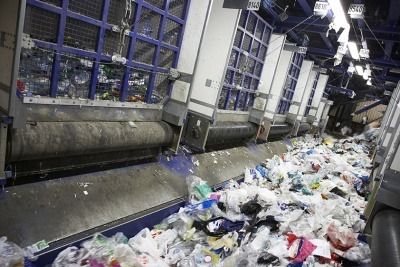
NLWA, which covers two million residents across the seven boroughs of Barnet, Camden, Enfield, Hackney, Haringey, Islington, and Waltham Forest, has confirmed with its recycling contractor Biffa that 100 per cent of its household recycled plastics are processed within the UK.
NLWA’s Chair, Cllr Clyde Loakes, said: “It is unconscionable that plastic waste generated in the UK is being sent to countries with minimal means to deal with it.
“The UK must deal with its own waste locally, not just for ethical reasons and to help combat the Climate Emergency but also because of the economic opportunities for the UK as it progresses to a more circular economy.
“I urge the UK Government, in the lead up to COP 26, to make the UK much more attractive to inbound ‘green’ manufacturing investment.
We need to build an end market for the UK’s recycling, which can help incentivise the building of necessary infrastructure and systems throughout the regions, with subsequent high-level jobs created in diverse areas including design, AI, technology, engineering, and logistics.
This focus will help greatly boost the levelling up agenda and the economy whilst reducing the nation’s carbon and plastic pollution footprints.”
“The UK Government should also urgently extend its ban of plastic stirrers, straws and plastic cotton buds to many more single-use, unecological and difficult-to-recycle plastics such as polystyrene take away containers and coffee cups and lids.
The Government must also fast track its Extended Producer Responsibility legislation whereby producers will face a ‘polluter pays’ tax unless their packaging has at least 30 per cent recycled content.”


Get our weekly digest
resource.co article ai

How will the government and DMOs address the challenges of including glass in DRS while ensuring a level playing field across the UK?
There's no easy solution to include glass in the DRS while maintaining a level playing field. Potential approaches include a phased introduction of glass, potentially with higher deposits to reflect its logistical challenges. The government and DMOs could incentivise innovation in glass packaging design and subsidise dedicated return points for glass-handling. Exemptions for smaller businesses unable to handle glass might also be necessary. Any successful solution will likely blend several approaches. It must address the differing priorities of devolved administrations, balance environmental benefits with logistical and cost implications, and be supported by robust consumer education campaigns emphasizing the importance of glass recycling.