

Scottish Minister Lorna Slater tours Binn Ecopark
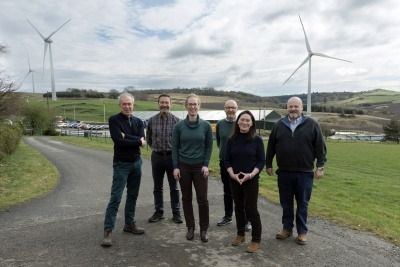
Scotland's Minister for Green Skills, Circular Economy and Biodiversity, Lorna Slater, toured Binn Ecopark at Glenfarg this week. The visit hopes to initiate the Government's recognition of new approaches to resource management, recycling and green energy technology.
The Minister's tour was hosted by company Chief Executive Allan MacGregor and focussed on the Ecopark's low-carbon resource recovery complex. Discussions were also held regarding the clean tech, low carbon systems currently operating and proposed at the 200-acre site.
The Minister also met John Ferguson, director of recycling firm Pi Polymer, as well as touring multiple operations taking place at Binn Ecopark, centering on the circular economy, renewable energy and low-carbon eco-innovation.
Binn Ecopark hopes to provide infrastructure with the ability to recycle a variety of large waste plastics. When it comes into operation in June, it will become Scotland's first site to separate large rigid mixed polymers into non-waste recycled granule and pellet form for downstream manufacturing.
The facility also features an anaerobic digestion plant, green-waste composting systems and four wind turbines which centre a new private grid project. Binn group say that this will ‘transform power use at the site, with proposals for a private grid connection to support Perth’s low carbon Smart Energy City objectives and benefit the wider community’.
MacGregor said: "As a business which is fully committed to reducing waste and growing the circular economy, we were happy to introduce Ms Slater to the strides being made here at Binn Ecopark."
Ferguson added: "This facility has the ability and vision to demonstrate much of what needs to be done to decarbonise Scotland’s resource management sector and demonstrate the many opportunities for clean growth in these challenging times.”
Farnham Repair Café launches free Repair Café Carbon Calculator V2
Farnham Repair Café (FRC) has set up the latest version of its Repair Café Carbon Calculator – titled V2. FRC also confirmed that the free online tool is available to repair cafés and similar organisations worldwide.
FRC announced the new features that will appear on the new calculator, including a graph showing a percentage breakdown of the carbon emission savings contribution from each product repair category. FRC hopes this will help users quickly see how different repair categories contribute to the overall carbon emission savings, and how or where savings might be improved.
Featured also on the latest calculator is a graph presenting the carbon emission savings intensity of repairs. This, FRC says, helps users to see if their repair café results or sessions are above or below the UK average calculated from original research data.
Bristol bin art project takes to the streets of St Pauls
A street art project, made up of decorated bins, came to St Pauls in Bristol this week, with the aim of changing the way people think about waste.
As part of a campaign called ‘Love St Pauls’, Bristol City Council and Bristol Waste have been working with children and young people in the area to decorate new bins with their artwork. The 15 Love St Paul’s bins, featuring the children’s designs, were installed on Tuesday and run the length of City Road and surrounding areas.
Designed in craft workshops held at youth groups in the area, the activity encouraged young people to talk about waste, litter and fly-tipping with the overall direction of how to improve the streets of St Pauls.
Help of local artist Deborah Weinreb and Sylvia Vincent from Imayla played a part in the creation, along with support from the Bristol Waste Community Engagement Team.
Jak Boydon, Community Engagement at Bristol Waste, said: “Keeping Bristol clean and tidy is at the heart of what we do. We believe that by working together, with the communities, with the council and Bristol Waste, we can make a real, positive impact on the areas we live and work in. Love St Pauls was a fun, community-led solution to a rubbish problem!
“The creative collaboration between the residents of St Pauls and local youth groups was designed to involve young people in making the area an enjoyable place to live. We hope this project adds to the vibrancy of the area and changes the way people think about their waste. If ‘Love St Pauls’ is a success, we hope to replicate it in different areas of Bristol to help improve neighbourhoods across the city.”


Get our weekly digest
resource.co article ai

How will the government and DMOs address the challenges of including glass in DRS while ensuring a level playing field across the UK?
There's no easy solution to include glass in the DRS while maintaining a level playing field. Potential approaches include a phased introduction of glass, potentially with higher deposits to reflect its logistical challenges. The government and DMOs could incentivise innovation in glass packaging design and subsidise dedicated return points for glass-handling. Exemptions for smaller businesses unable to handle glass might also be necessary. Any successful solution will likely blend several approaches. It must address the differing priorities of devolved administrations, balance environmental benefits with logistical and cost implications, and be supported by robust consumer education campaigns emphasizing the importance of glass recycling.