

Construction has begun on the external structure of a new Resource Recovery Facility (RRF) and public reuse and recycling centre at Edmonton EcoPark.
Commencing earlier this month, the project forms part of the North London Heat and Power Project (NLHPP): an infrastructure strategy tasked with facilitating an increase in recycling rates across London, mandated by the North London Waste Authority (NLWA).
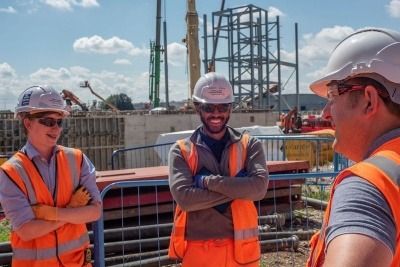
Contractor Taylor Woodrow will make use of almost 3,000 tonnes of steel to construct the RRF over the next four months, which, once completed, will have the capacity to recover an additional ‘135,000 tonnes of recyclable material’ annually that would have otherwise been disposed of, according to the NLWA.
The integrated reuse and recycling centre will allow local residents to drop off their household recycling at Edmonton EcoPark for the first time. The NLWA states that this hopes to feed into its commitment to driving up north London’s household recycling rates from 30 per cent to 50 per cent.
Additionally, Taylor Woodrow has been contracted to erect a new visitor and education centre, EcoPark House, on the River Lee Navigation. Within this facility, the local community will have access to information about waste management and recycling, as well as advice on how to reduce the carbon impact of their waste. The centre will also provide a space for the Edmonton Sea Cadets.
The NLWA states that the new facilities will provide opportunities for young people within the local area in the form of apprenticeships and training placements, with the NLHPP having already established 100 skilled apprenticeships and 225 on-site training placements across the region prior to the construction of the sites.
As yet, 10 apprentices from the surrounding neighbourhoods have been appointed to work on one of the EcoPark’s new facilities. An additional 27 on-site training placements have been created as part of an NLHPP scheme that will aim to help local people acquire hands-on vocational experience, working towards obtaining a Construction Skills Certificate Scheme (CSCS) card.
The NLWA claims that the RRF has been designed to the highest standards for minimal environmental impact. The facility has been positioned in a way that will maximise the benefits of renewable solar energy used to power the plant, with panels placed at the optimum angle to capture the topmost amount of rays for the generation of electricity, according to the waste authority. It also states that, during construction, Taylor Woodrow utilised a novel piling technique in the creation of the facilities’ foundations, which has reduced the embodied carbon in the original scheme design by 10-16 per cent. The contractor is also said to be developing solutions that will aim to minimise the energy demand for the EcoPark House.
Beyond the construction of these facilities, the NLWA is developing plans for non-recyclable waste. In 2022, development will commence on a new Energy Recovery Facility (ERF), which NLWA hopes will divert approximately 700,000 tonnes of waste from landfill annually.
Councillor Clyde Loakes, Chair of NLWA, commented: “I was delighted to visit the EcoPark this week to see the first pieces of steelwork be put in place for the new Resource Recovery Facility and public Reuse and Recycling Centre.
“This major milestone is part of our investment in recycling infrastructure which is the most significant north London has seen for a generation, to help boost household recycling rates to 50 per cent.
“I was fortunate to meet a group of apprentices who are kickstarting their careers working on our nationally significant infrastructure project. It was fantastic to hear about the work they are involved in and the skills they are developing.”
Steve Pate, Project Director of EcoPark South for Taylor Woodrow said: “Following successful completion of groundworks, piling and reinforced concrete operations, the start of steelwork marks an exciting milestone for the project. The coming weeks will see the buildings for this flagship facility really start to take shape.”


Get our weekly digest
resource.co article ai

How will the government and DMOs address the challenges of including glass in DRS while ensuring a level playing field across the UK?
There's no easy solution to include glass in the DRS while maintaining a level playing field. Potential approaches include a phased introduction of glass, potentially with higher deposits to reflect its logistical challenges. The government and DMOs could incentivise innovation in glass packaging design and subsidise dedicated return points for glass-handling. Exemptions for smaller businesses unable to handle glass might also be necessary. Any successful solution will likely blend several approaches. It must address the differing priorities of devolved administrations, balance environmental benefits with logistical and cost implications, and be supported by robust consumer education campaigns emphasizing the importance of glass recycling.