

Macclesfield-based Tidy Planet has provided an oilfield in Kazakhstan with equipment to compost the site’s 255 annual tonnes of food waste.
Tidy Planet provided the site with four of its A900 Rocket Composters and a bespoke Dehydra Dewatering system, enabling the oilfield to convert its waste into compost, reducing the greenhouse gas emissions associated with incineration and pushing the organic waste stream further up the waste hierarchy.
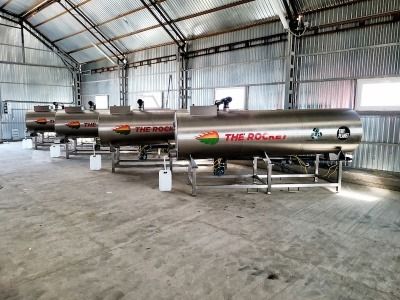
The equipment was shipped in late June and is currently being installed on-site.
The remote 50km² facility, which is situated in the Burlin region of Western Kazakhstan, is a major producer of oil and gas, and has 4,000 employees working on the premises at any one time.
Its workers’ camps and canteens generate a quarter of a kilotonne of food waste every year. Prior to investing in an on-site composting solution, this material was sent for a combination of incineration and landfill, as there was an absence of commercial food waste processing sites that could accept the waste.
In January this year, Kazakhstan passed a new law prohibiting the burial of food waste, with the aim of reducing the country’s five million tonnes of solid waste sent to landfill every year.
Huw Crampton, Sales Manager at Tidy Planet, said: “There’s hardly any infrastructure yet available to process food waste in Kazakhstan, so when the law recently changed around how it could be dealt with, this prompted our client to invest in a process that treated it as close to its source as possible.”
“Demtec is a waste management contractor to the oilfield, so when the law changed, the team built a new composting facility a stone’s throw away from where the waste is produced.
“As a result, this avoids excessive transportation – reducing the firm’s carbon emissions and eliminating off-site disposal costs.
“The nutrient-rich compost will also enable the site to sequester 70 tonnes of physical carbon into the surrounding soils each year – removing the CO2 from our atmosphere. It’s a better solution than any off-site process could ever have offered.
“With temperatures ranging from -40°C in winter to +40°C in the summer months, this might be one of the world’s most extreme working environments – proving if you can compost here, you can do it anywhere.”
Bakhitzhan Setzhanov, Director at Demtec Solutions, added: “With the new laws surrounding what we can do with food waste, we wanted to find an environmentally friendly solution that we could also use on other projects.
“We saw that the Rockets were already being used on other oilfields, so it made sense to look at learning more about the equipment. We’ve never made compost before, but when we realised that we could do it on site – treating our wastage at source – it was something we definitely wanted to pursue.
“We’ve done some research into composting and know that the quality of the output is important.
“So, we asked Tidy Planet to build our dewatering unit into a special inspection bench – where our team will handpick all the non-compostable items from the food waste before it’s fed to the composters. This way we know that the product we make is clean and good for the soil.”


Get our weekly digest
resource.co article ai

How will the government and DMOs address the challenges of including glass in DRS while ensuring a level playing field across the UK?
There's no easy solution to include glass in the DRS while maintaining a level playing field. Potential approaches include a phased introduction of glass, potentially with higher deposits to reflect its logistical challenges. The government and DMOs could incentivise innovation in glass packaging design and subsidise dedicated return points for glass-handling. Exemptions for smaller businesses unable to handle glass might also be necessary. Any successful solution will likely blend several approaches. It must address the differing priorities of devolved administrations, balance environmental benefits with logistical and cost implications, and be supported by robust consumer education campaigns emphasizing the importance of glass recycling.